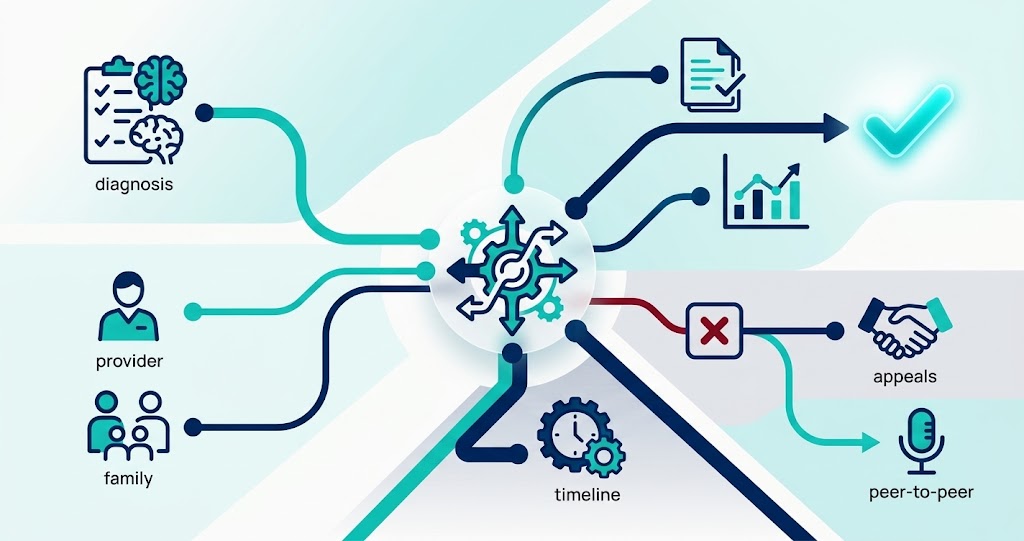
If you’ve ever waited three weeks for an ABA authorization to clear, only to have it denied over a missing diagnosis code, you already know why this process deserves a proper guide. Carelon ABA authorization isn’t complicated once you know what the reviewers are actually looking for. Most denials come down to paperwork gaps, not clinical disagreement. In this guide, we’ll cover Carelon’s requirements, the steps involved in the review process, and the reasons approvals can sometimes take longer.
What Carelon Behavioral Health Actually Does
Carelon Behavioral Health manages behavioral health benefits for a long list of insurance plans, and ABA (Applied Behavior Analysis) therapy is one of the services that almost always requires prior authorization before treatment starts. That means before a child can begin sessions, or before an existing treatment plan can continue, someone has to submit documentation to Carelon and get it approved.
This isn’t unique to Carelon. Most insurers handle ABA this way because the therapy is intensive, often long-term, and expensive enough that plans want clinical justification on file. What sets Carelon apart is its specific documentation requirements and its review timeline, which providers need to plan around rather than fight against.
Why Prior Authorization Exists for ABA Therapy
ABA authorization exists because ABA isn’t a one-time appointment. A typical treatment plan might call for 20, 30, or even 40 hours a week of therapy, spread across months or years. Insurers want to confirm two things before covering that: that the diagnosis supports the need, and that the treatment plan is reasonable for the child’s age and presentation.
This is where a lot of families get frustrated. The therapy itself isn’t in question. It’s the paperwork proving medical necessity that holds things up. Understanding that distinction changes how you approach the whole process.
Who Needs to Get Involved
Three groups typically touch a Carelon ABA authorization request, and each one plays a different role. Knowing who does what makes it easier to know where to turn for Carelon ABA authorization help if something stalls along the way.
Healthcare Providers
The BCBA (Board Certified Behavior Analyst) or supervising clinician usually initiates the request. They’re the ones writing the treatment plan, documenting the assessment results, and specifying the recommended hours. Their notes carry the most weight in Carelon’s review.
Insurance Coordinators
Whoever handles billing and authorizations at the provider’s office manages the actual submission, tracks the status, and follows up if something’s missing. Many people underestimate how important this role can be. A well-organized coordinator can shave weeks off the process just by catching errors before submission instead of after a denial.
Families
Parents and guardians aren’t usually filling out clinical forms, but they’re often asked to confirm demographic details, sign consent forms, or provide insurance card information. Some plans also want a parent statement describing the child’s daily challenges, which adds real-world context to the clinical documentation.
What Information Carelon Requires
Carelon ABA authorization requests generally need to include a specific set of information. Skipping any of these is the fastest way to trigger a delay or denial.
Patient details: Full name, date of birth, insurance ID, and diagnosis code (usually an autism spectrum disorder diagnosis under ICD-10). This has to match exactly what’s on file with the insurance plan, down to the spelling of the name.
Provider credentials: The BCBA’s license number, NPI, and practice information. If a supervisee is delivering sessions, that person’s credentials need to be included, too.
Clinical assessment results: This is usually a recent assessment, such as a VB-MAPP, ABLLS-R, or similar tool, showing current skill levels and areas of deficit. Carelon wants to see data, not just a narrative description.
Treatment plan specifics: Requested hours per week, session frequency, targeted goals, and the timeline for reassessment. Insurance may question requests that don’t include a specific number of hours, such as “as many hours as possible.” Specific, justified numbers move faster.
Progress notes for renewals: If this is a continuation of existing therapy rather than a new request, Carelon wants documentation showing measurable progress or, in some cases, an explanation for why progress has plateaued.
Missing even one of these categories often means an automatic request for additional information, which restarts the clock.
How to Submit a Carelon ABA Authorization Request
Providers typically have three ways to get a request in front of Carelon.
The provider portal allows for faster submissions and is the method Carelon recommends using. It lets you track status in real time and upload documents directly, which cuts down on lost paperwork.
Fax submission still exists, and some smaller practices rely on it, particularly in areas with spotty internet access. It works, but it’s slower to confirm receipt, and there’s more room for pages to go missing.
Urgent cases may be handled through a phone request, but written documentation must still be provided. This route makes sense when a child is about to lose coverage mid-treatment, and there’s no time to wait on a portal review.
Whichever method you use, keep a copy of everything you send and the date you sent it. If a request gets lost or delayed, you’ll want your own paper trail, not just Carelon’s.
Timeline: How Long Does Approval Take
Standard requests usually get a decision within a few business days to about two weeks, depending on plan type and how complete the initial submission was. Expedited or urgent requests, when properly flagged as such, can move faster, sometimes within 72 hours.
What impacts the timeline the most is often something outside of Carelon’s internal workflow. It’s whether the first submission is complete. Requests that come in missing documentation almost always take longer than the stated timeline, because they get kicked back for more information before the clock even starts properly.
Common Reasons Carelon Denies ABA Requests
Some denial reasons come up more often than others, but many can be avoided with proper preparation.
- Outdated assessments: If the clinical assessment is more than six months old, Carelon may consider it stale and ask for a new one.
- Mismatched hours and severity: Requesting maximum hours for a mild presentation without a clear justification tends to draw scrutiny.
- Missing diagnosis confirmation: A diagnosis from a provider who isn’t recognized as qualified to diagnose autism spectrum disorder under the plan’s rules can trigger a denial, even if the diagnosis itself is accurate.
- Incomplete treatment goals: Goals that aren’t measurable or don’t align with the assessment data get flagged during review.
- Lapsed authorization gaps: If there’s a gap between when one authorization period ends and the next request is submitted, Carelon may require a fresh clinical review rather than treating it as a simple renewal.
Catching these before submission saves everyone time, including the family waiting on services to start.
What to Do If a Request Gets Denied
Denials aren’t always final. Carelon, like most insurers, has an appeals process, and providers can request a peer-to-peer review where the treating clinician speaks directly with a Carelon medical reviewer. This step resolves a surprising number of denials, particularly when the original paperwork was solid but incomplete in one specific area.
If a peer-to-peer doesn’t resolve it, a formal written appeal with additional documentation is the next step. Include anything that strengthens the clinical case: updated assessment data, letters from other treating professionals, or evidence of medical necessity that wasn’t in the original submission.
Families also have appeal rights independent of the provider, and in some states, an external review through the state insurance department is available if internal appeals don’t work out.
Tips for a Smoother Process
Submit renewal requests early, at least two to three weeks before the current authorization expires. Waiting until the last week almost guarantees a coverage gap.
Keep assessment data current and specific. Reviewers respond better to numbers and measurable goals than to general descriptions of a child’s needs.
Build a relationship with whoever handles authorizations at your practice, or if you’re a parent, ask your provider who that contact is. Having a name to follow up with beats calling a general customer service line every time.
Document everything. Dates, confirmation numbers, and names of anyone you spoke with. If a dispute comes up later, this record matters more than memory.
Conclusion
Getting a Carelon ABA authorization approved isn’t about luck or persistence alone. It comes down to submitting complete, current, and specific documentation the first time. Providers who build a consistent process around assessments, treatment plans, and renewal timing tend to see far fewer denials than those who submit reactively. For families, understanding this process means less anxiety waiting for a decision and a clearer sense of what’s actually happening behind the scenes while you wait for services to begin.
Frequently Asked Questions
1. How long does a Carelon ABA authorization typically last before renewal is needed?
Most Carelon authorizations are valid for six months, though some plans may approve shorter periods.
2. Can a family start ABA therapy before Carelon approves the authorization?
Usually no. Starting treatment before approval may leave the family responsible for the cost.
3. Does Carelon require a specific diagnosing provider for ABA authorization?
Yes. The diagnosis must usually come from a qualified provider approved by the health plan.
4. What happens if my child’s ABA hours need to increase mid-authorization?
Your provider must submit a request with updated clinical documentation for review.
5. Is expedited review available for urgent ABA authorization needs?
Yes. Urgent requests can be expedited if the provider includes supporting documentation.