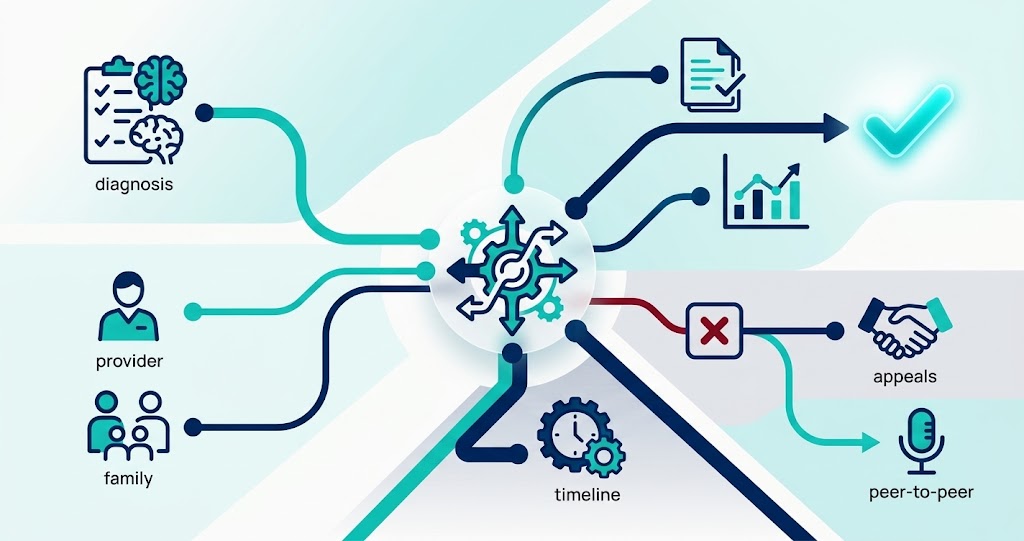
If your claims are sitting in denial limbo for six weeks and nobody on staff can tell you why, you don’t have a billing problem. You have a billing service problem. And that gap between “we submitted the claim” and “we actually got paid” is exactly where most ABA practices bleed money without realizing it.
Finding the right ABA billing services isn’t about picking whoever answers the phone first or offers the lowest percentage rate. It’s about finding a partner who understands the specific mess that is ABA billing: authorization limits, unit-based codes, payer rules that change depending on which insurance company woke up on the wrong side of the bed. This guide breaks down what actually matters when you’re evaluating options, so you’re not just guessing.
Why ABA Billing Is Different From Everything Else
Most billing software and billing companies were built with general medical practices in mind. Doctor visits, straightforward CPT codes, one session per day. ABA doesn’t work that way.
A single client might have multiple sessions a week, with different providers, different service codes, and authorization limits that expire mid-treatment plan. Add in the fact that Medicaid rules vary by state and that commercial payers often require prior authorization renewals every 90 days, and you’ve got a system that punishes anyone who treats it like standard medical billing.
This is why generic billing services often struggle with ABA clients. They know how to bill. They don’t necessarily know how to bill for applied behavior analysis, which means denials pile up, resubmissions take forever, and your cash flow suffers while everyone tries to figure out what went wrong.
What to Look For in ABA Billing Services
Real Experience With ABA, Not Just Healthcare in General
Ask any vendor point-blank: how many ABA practices do you currently bill for? If they hesitate or give you a vague answer, that’s information. You want a team that already knows the difference between H0032 and 97153, that understands authorization tracking, and that has seen the specific denial patterns unique to behavioral health claims. A well-established ABA billing company will answer this question without hesitation, because they’ve already seen these patterns play out across dozens of ABA practices.
Experience here isn’t a nice-to-have. It’s the difference between a 60% clean claim rate and a 95% one.
Strong Collection Rates, Not Just Low Fees
A lot of practices get tempted by the vendor charging the smallest percentage. Makes sense on paper. But a company charging 4% and collecting 78% of what you’re owed is costing you more than one charging 6% and collecting 95%.
Do the math on your own numbers before signing anything. If your practice bills $150,000 a month, a 17-point difference in collection rate is over $25,000 monthly, way more than you’d ever save on a lower fee percentage.
Authorization and Eligibility Management
This is where a lot of ABA claims die before they even get submitted. Authorizations expire. Units run out mid-month. Insurance eligibility changes without anyone telling the practice. The best billing services track this proactively instead of waiting for a denial to tell them something’s wrong.
Ask specifically how they monitor authorization expiration dates and whether they flag issues before claims go out the door, not after.
Transparent Reporting You Can Actually Understand
You should be able to log in and see, in plain terms, what’s been billed, what’s been paid, what’s pending, and what’s been denied and why. If a vendor’s reporting requires a translator to interpret, that’s a problem. Good ABA billing services give you dashboards that make sense to a practice owner, not just a billing specialist.
Ask to see a sample report before you commit. If it’s confusing to you now, it’ll still be confusing in six months.
Denial Management That Goes Beyond Resubmitting
Anyone can resubmit a denied claim. The question is whether the vendor is identifying patterns. If the same denial code keeps showing up for the same payer, that’s a fixable process issue, not bad luck. Strong billing partners track denial trends and adjust their submission process accordingly instead of treating every denial as an isolated event.
HIPAA Compliance and Data Security
You’re handing over sensitive client data, session notes, diagnosis codes, and insurance information. The vendor needs airtight security protocols, not just a mention of “we’re HIPAA compliant” on their website. Ask about encryption standards, staff training, and what happens in the event of a data breach. If they can’t answer clearly, keep looking.
Scalability as Your Practice Grows
What works for a practice with three BCBAs and twenty clients won’t necessarily work when you’re at fifty clients and expanding into a new state with different Medicaid rules. Ask potential vendors how they’ve handled growth with other clients. Have they onboarded new states? Do they have experience with multiple payer types, commercial, Medicaid, and TriCare? A vendor that’s only ever worked with small single-state practices may struggle once you scale.
In-House Billing vs. Outsourced ABA Billing Services
Some practices, especially newer or smaller ones, choose to keep billing in-house. It can work, particularly if you have someone on staff who genuinely understands ABA-specific codes and payer requirements. But it takes time most owners don’t have, and mistakes get expensive fast.
Outsourcing to a dedicated ABA billing company shifts that burden off your plate. You’re not managing turnover, training, or staying on top of changing payer policies yourself. The tradeoff is cost, usually a percentage of collections, but for many practices, the improved collection rate and time saved more than make up for it.
There’s no universal right answer here. A practice collecting well above 85% in-house might not need to change anything. One struggling below that threshold is probably losing more to inefficiency than they’d ever pay a competent billing partner.
What to Review Before Signing a Contract
Before committing to any ABA billing services provider, get clear answers to these:
- What’s your average clean claim rate for ABA-specific claims?
- How do you handle authorization tracking and renewals?
- How Do You Handle Denied Claims?
- Can you provide references from other ABA practices you currently serve?
- What does your reporting dashboard actually look like?
- How do you handle credentialing for new providers joining our practice?
- What happens if we want to switch vendors later? How easy is data transfer?
Getting straight answers to these tells you more than any sales pitch will.
Red Flags to Watch For
A few things should make you pause before signing anything. Vague answers about ABA-specific experience. Reluctance to share collection rate data. No clear escalation process when claims get stuck. And contracts with long lock-in periods and no easy exit clause if the service doesn’t perform. If a vendor can’t or won’t be transparent about these things upfront, that tells you how things will go once you’re already a client.
Conclusion
Choosing ABA billing services comes down to fit, not flash. The right partner understands the specific quirks of behavioral health billing, communicates clearly, and actually improves your bottom line instead of just taking a cut off the top. Take the time to ask hard questions before signing anything. The vendor who’s confident and specific in their answers is usually the one worth trusting with your revenue cycle.
Frequently Asked Questions
1. What percentage do ABA billing services typically charge?
Most charge somewhere between 4% and 8% of collected revenue, though this varies based on claim volume, payer mix, and the range of services included. Some also charge flat monthly fees instead of a percentage model.
2. How long does it take to switch ABA billing services?
Transitioning usually takes anywhere from two to six weeks, depending on how much historical data needs to be transferred and whether the new vendor needs time to complete credentialing with your payers.
3. Can ABA billing services handle multiple states and payer types?
Experienced vendors can, but not all of them do. Smaller billing companies sometimes specialize in a single state or a narrow set of payers, so it’s worth confirming this upfront if you operate across state lines or work with a mix of commercial and Medicaid clients.
4. What’s a good collection rate to expect from an ABA billing company?
Strong vendors typically collect 90% or more of billed revenue. Anything consistently below 85% suggests inefficiencies worth investigating, whether that’s the vendor’s process or gaps in your own documentation.
5. Do ABA billing services help with credentialing new providers?
Many do, though it’s not universal. If you’re regularly hiring new BCBAs or RBTs, ask specifically whether credentialing support is included or billed separately, since delays here can hold up reimbursement for months.