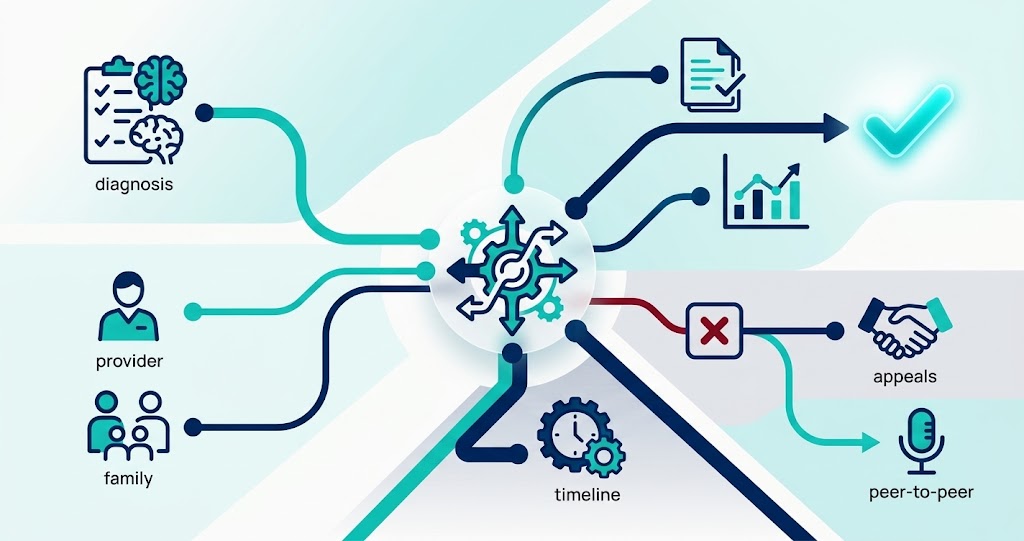
Your child just got approved for ABA therapy. Great news, right? Then the provider says you still need prior authorization before sessions can start, and suddenly you’re staring at another wall of paperwork. This happens to almost every family, and it often catches them off guard. Understanding the ABA authorization process before you hit this wall saves you weeks of confusion and, honestly, a lot of frustration.
Prior authorization is the step where your insurance company reviews your child’s diagnosis, the recommended treatment plan, and the requested hours, then decides whether to pay for it. It’s not optional. It’s not a formality either. Skip it or misunderstand it, and you could end up with denied claims or therapy that starts far later than it should.
Here’s what actually happens, step by step, and what you can do to keep things moving.
What Prior Authorization Actually Means
Insurance companies don’t automatically pay for ABA therapy just because a doctor recommended it. They want proof that the treatment is medically necessary, appropriate for your child’s diagnosis, and delivered at a reasonable intensity. That proof comes in the form of documents your ABA provider submits on your behalf.
Think of it as insurance, asking, “Show us why this is needed, and show us the plan.” Once they review it, they either approve the requested services, approve a modified version (such as fewer hours than requested), or deny it outright. Each of those outcomes changes what happens next for your family.
Most plans require this authorization before services begin and then again periodically, usually every six months, to confirm the therapy is still working and still needed.
Step One: Diagnosis and Referral
Everything starts with a formal autism diagnosis, typically from a pediatrician, developmental pediatrician, neurologist, or psychologist. Insurance companies won’t authorize ABA without this documentation on file. If your child was diagnosed years ago, some insurers still want a recent evaluation, so check that detail early rather than assuming an old diagnosis will suffice.
Once you have the diagnosis, you’ll need a referral or prescription for ABA services. Some states and plans require this from a physician specifically. Others accept it from the diagnosing provider. The intake team at your ABA agency can usually tell you what your insurance provider requires, making the process much easier.
Step Two: The Assessment
Before anyone submits paperwork to insurance, a Board Certified Behavior Analyst, or BCBA, needs to evaluate your child directly. The first appointment is much more than a simple introduction. The assessment usually involves direct observation, standardized testing tools, and detailed conversations with you about your child’s behaviors, strengths, and daily challenges.
This step matters more than families realize. The strength of this assessment directly affects whether insurance approves the request. A thin, generic assessment gets questioned or denied. A thorough one, backed by specific data and clear goals, moves through review much faster.
Expect this phase to take one to two sessions, sometimes spread across a couple of weeks, depending on your child’s needs and the provider’s availability. If the paperwork seems confusing, check whether your provider offers prior authorization support. Before your claim is submitted, our team goes through the details to help avoid errors and delays.
What the BCBA Is Looking For
During the assessment, the BCBA identifies specific skill deficits (communication, social skills, self-care, behavior regulation) and measures where your child currently stands against typical developmental milestones. They’re building a case, essentially, one that shows insurance exactly why ABA is necessary and what it will target.
Step Three: Building the Treatment Plan
Once the assessment is finished, the BCBA creates a treatment plan based on the findings. This document includes specific, measurable goals, the strategies that will be used to reach them, and a recommended schedule, usually stated in hours per week.
Insurance providers carefully review this document before making a decision. Goals should be specific, not broad statements like “improve behavior.” Specific ones do. Something like “increase spontaneous verbal requests from zero to five per session within three months” gives insurance reviewers exactly what they need to say yes.
If you’re reviewing this plan with your provider before submission, ask questions. Do the goals reflect what you actually see at home? Does the recommended hour count feel realistic for your family’s schedule? Your feedback helps providers create a stronger plan, which can reduce delays and additional requests from insurance companies.
Step Four: Submitting for Prior Authorization
With the treatment plan finalized, your provider submits the full authorization request package to your insurance company. This typically includes:
- The diagnostic report
- The BCBA’s comprehensive assessment
- A detailed treatment plan with clear goals and the recommended amount of therapy
- Any prior treatment history, if applicable
Most insurers take anywhere from a few days to a few weeks to respond. Some plans move faster if the provider is in network and submits electronically. If the request is out of network, the approval process can take close to a month. If your child is on a waitlist for services anyway, this waiting period often overlaps, which softens the blow somewhat.
Common Reasons Requests Get Delayed or Denied
Some situations that come up often include:
- Missing or outdated diagnostic paperwork
- Treatment goals that are too vague or not measurable
- Requested hours that seem excessive for the documented needs
- Incomplete provider credentialing with the insurance plan
- Insurance requiring a specific form or format that wasn’t used
Most denials aren’t final. They often request more information, which your provider can usually resolve with a follow-up submission.
What Happens After Approval
Once approved, your child can start receiving ABA services at the authorized hours. But this isn’t a one-time event. Authorization typically covers a fixed period, often six months, after which your provider needs to request reauthorization.
That reauthorization request includes updated progress data. How close is your child to meeting the original goals? Have new goals emerged? Does the hour count still make sense, or does it need adjusting up or down? Insurance wants to see measurable progress tied to the original plan, not just a note saying therapy is “going well.”
Families who stay engaged, attend parent training sessions, giving feedback during progress reviews tend to see smoother reauthorizations. Insurance companies notice consistent documentation of family involvement, and it strengthens the case for continued coverage.
Tips to Keep the Process Moving
A few things genuinely help speed things along:
Respond quickly to requests from your provider: If they need signed consent forms or updated contact information, don’t let it sit for a week.
Keep copies of everything: Diagnosis reports, treatment plans, and insurance correspondence. If something gets lost in the shuffle, you’ll have backup.
Ask your provider directly about turnaround times: Every insurance plan behaves differently. Your provider’s billing team has likely dealt with your specific insurer dozens of times and can give you a realistic timeline instead of a guess.
Understand your plan’s specific ABA benefits before you start: Some plans cap annual hours. Some require preauthorization for every single service type, including parent training. Knowing this upfront prevents surprises on your billing statement later.
Don’t assume silence means denial: Sometimes it just means the review is still in progress. Follow up, but give it a reasonable window first, usually two to three weeks, before assuming something went wrong.
Conclusion
The ABA authorization process has a lot of moving pieces, but it follows a predictable order: diagnosis, assessment, treatment plan, submission, and then ongoing reauthorization every few months. None of it moves instantly, and that’s frustrating when you just want your child to start getting help. Staying organized, asking questions early, and keeping communication open with your provider make the biggest difference in how smoothly it goes. The families who navigate this well aren’t the ones who avoid delays entirely. They’re the ones who stay one step ahead of the paperwork.
Frequently Asked Questions
1. How long does ABA prior authorization typically take?
Most requests are approved within a few days to four weeks, depending on the insurance company.
2. Can ABA therapy start before authorization is approved?
Usually no. Most insurance plans won’t cover sessions provided before authorization is approved.
3. What happens if my authorization request gets denied?
Your provider can often resubmit the request with more information or file an appeal.
4. Do I need a new authorization every time my child’s treatment plan changes?
Yes. Major changes to goals, hours, or services usually require a new authorization.
5. How often does ABA therapy need reauthorization?
Most insurance plans require reauthorization every six months, though some require it more often.