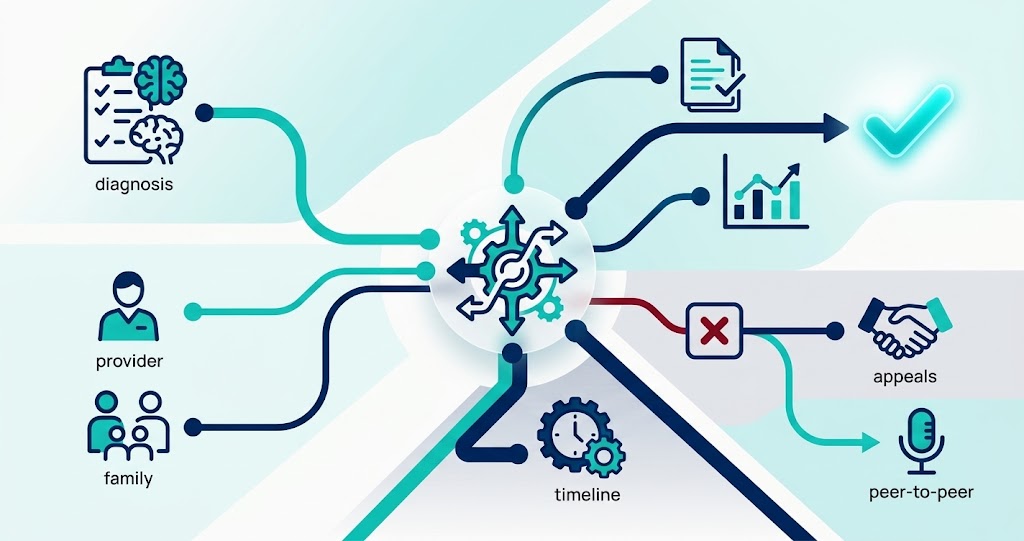
A missed authorization deadline costs more than a denied claim. It costs a family two weeks of therapy they can’t get back. This is a familiar challenge for most ABA practice owners. What you might not have is a system that catches problems before they turn into denials.
This ABA prior authorization checklist is built for that. Not a theory piece. A working list you can hand to your front desk staff today.
Why ABA Authorizations Are Harder Than Most
Ask any biller who’s worked across specialties, and they’ll tell you ABA is a different animal. A typical outpatient visit needs one authorization, maybe a handful of codes. Many ABA treatment plans include 20 to 40 hours of therapy per week, delivered by different providers and reviewed at scheduled intervals.
That volume alone creates room for error. But it’s not just volume. A few things stack up:
- Payers treat ABA differently. Some insurers still lump it under general behavioral health rules that don’t fit the actual treatment model.
- Documentation demands are heavier. Diagnostic evaluations, treatment plans, progress notes, all of it needs to line up with what you’re billing.
- Authorizations expire fast. Sixty or ninety-day windows are common. Miss the renewal and sessions stop getting paid, even if the child still needs care.
- Every state and plan has its own rules. What works for one Medicaid plan won’t work for a commercial payer three states over.
None of this is going away. If anything, payers are tightening documentation rules, not loosening them. That’s part of why more practices are turning to dedicated ABA Authorization Services instead of trying to keep every rule change straight in-house. So the practices that do well are the ones with a repeatable process, not the ones scrambling case by case.
The Core ABA Prior Authorization Checklist
Here’s the process, broken into steps you can actually follow. Print it. Laminate it. Whatever gets your staff to use it consistently.
1. Confirm Coverage Before You Schedule Anything
Don’t wait until session one to discover ABA isn’t covered under a plan, or that it’s covered with restrictions nobody flagged.
Don’t rely on the insurance company’s name alone. Check the patient’s individual plan to see if ABA therapy is covered. Confirm the maximum hours allowed per week or month.
Make sure the provider’s credentials actually meet what the payer requires. In many cases, a BCBA must remain the supervising provider, while BCaBAs or RBTs deliver day-to-day therapy.
Also, confirm whether prior authorization applies to the initial assessment, ongoing therapy, or both. Payers don’t always treat these the same way.
Skipping this step is the single biggest reason practices end up delivering care they never get paid for.
2. Gather the Right Documents Before You Submit
Most denials aren’t really about the therapy itself. They’re about gaps in paperwork.
Before submission, your file should include a few essentials: a diagnostic evaluation with current ICD-10 and, where required, DSM-5 codes, a comprehensive assessment showing baseline behaviors and skill deficits, an individualized treatment plan with measurable goals, and recent progress notes if you’re renewing rather than requesting for the first time.
Skip vague language like “improve communication.” Payers want numbers and timelines, not intentions.
Practices that keep a digital folder per client, updated as documents come in, rarely find themselves scrambling for a signature the night before a deadline.
3. Use the Correct Payer-Specific Forms
This sounds small until it costs you a denial. Every payer has its own version of the prior authorization form.
Using an outdated one, or the wrong one entirely, remains one of the most common and most avoidable mistakes in ABA billing. Double-check that you’re working with the most recent version.
Check that every required field is complete, including provider NPI numbers and taxonomy codes. Confirm the request goes through the correct channel, whether that’s a payer portal, fax line, or dedicated software.
If your team submits to five or six different payers regularly, build a one-page reference sheet listing each payer’s form, submission method, and typical turnaround. It saves real time and prevents rework.
4. Track Authorization Timelines Like Your Revenue Depends on It
Because it does. Authorizations don’t renew themselves, and payers won’t remind you when yours is about to lapse.
Set internal flags at least 30 days before an authorization expires. If your billing software can automate this, use it. If it can’t, a shared calendar with hard reminders works fine too. What matters is that someone owns this task and checks it weekly, not monthly.
5. Keep Families in the Loop
Parents don’t always understand why therapy can’t start the day after intake, or why a renewal takes two weeks. Set expectations early. Explain, in plain language, that authorization is a payer requirement, not something your practice controls.
It’s more important than many people realize. Families who understand the process are less likely to blame the practice for delays, and more likely to submit any documents you need from them quickly.
Common Mistakes That Lead to Denials
A few patterns show up again and again in ABA billing, regardless of payer:
- Incomplete assessments with missing baseline data
- Requested hours that don’t match the treatment plan on file
- Letting an authorization lapse mid-treatment
- Vague, non-measurable goals instead of specific targets
- Missing the appeal window after a denial
Each of these is fixable with a little attention up front. Most denials trace back to one of these five things, not some unpredictable payer decision.
Should You Outsource Prior Authorization?
More ABA practices are handing this off to billing specialists, and it’s worth understanding why. Authorization work is repetitive, deadline-driven, and unforgiving of small errors. That’s exactly the kind of task that benefits from a dedicated team that does nothing else all day.
Outsourcing isn’t right for every practice. If you’re a small clinic with one or two clients and a tight handle on your payer mix, doing it in-house might still make sense. But if you’re managing multiple payers, growing your caseload, or watching denial rates creep up, a billing partner that specializes in ABA can catch errors your front desk doesn’t have time to look for.
The tradeoff is straightforward. You give up some control over the process, and you pay for the service. In exchange, you get fewer denials, faster renewals, and staff who aren’t buried in payer portals instead of supporting clients.
Technology’s Role in Reducing Denials
Even if you keep authorization work in-house, the right software changes the math.
Look for tools that flag missing documentation before submission rather than after a denial comes back. Good software also tracks expiration dates automatically instead of relying on someone’s memory.
Templates matter too. Systems that store payer-specific forms mean staff aren’t rebuilding requests from scratch every time. And when you need to appeal a denial, a clear audit trail saves hours of digging.
None of this replaces solid clinical documentation. What it does is remove the human error that creeps in when someone’s managing forty active authorizations off a spreadsheet and good intentions.
Conclusion
Prior authorization in ABA therapy isn’t going to get simpler. Diagnosis rates are rising, payers are adding documentation requirements, and appeal processes are getting more common, not less. The practices that hold up under that pressure are the ones with a checklist like this built into daily operations, not something they think about only after a denial shows up.
Get the process right once, train your team on it, and the paperwork stops being the thing standing between your clients and their therapy.
Frequently Asked Questions
1. How long does ABA prior authorization usually take to process?
Most prior authorization requests take a few days to two weeks, depending on the payer and the case.
2. What happens if an ABA authorization expires mid-treatment?
Services provided after the authorization expires are usually not covered. Keeping track of renewal dates helps prevent payment issues.
3. Can a prior authorization request be denied even with all documents submitted?
Yes. Even with complete paperwork, a request may be denied if it doesn’t meet the payer’s medical necessity or policy requirements.
4. Do all insurance plans require prior authorization for ABA therapy?
No. Authorization requirements vary by insurance plan, so it’s important to verify coverage before services begin.
5. Is it worth using billing software just for authorization tracking?
Yes, especially for growing practices. It helps track renewal dates and reduces the risk of missed authorizations and denied claims.